Yuba City, California
12 planned ports at 969 Clark Avenue. In development; not open for charging.
Explore the project
For investors & business partners
Explore opportunities to help fund new RoadRunner EV charging locations. Our Yuba City project is the starting point for a broader development vision across five western states. Property and gas station owners can also explore our partnership options.
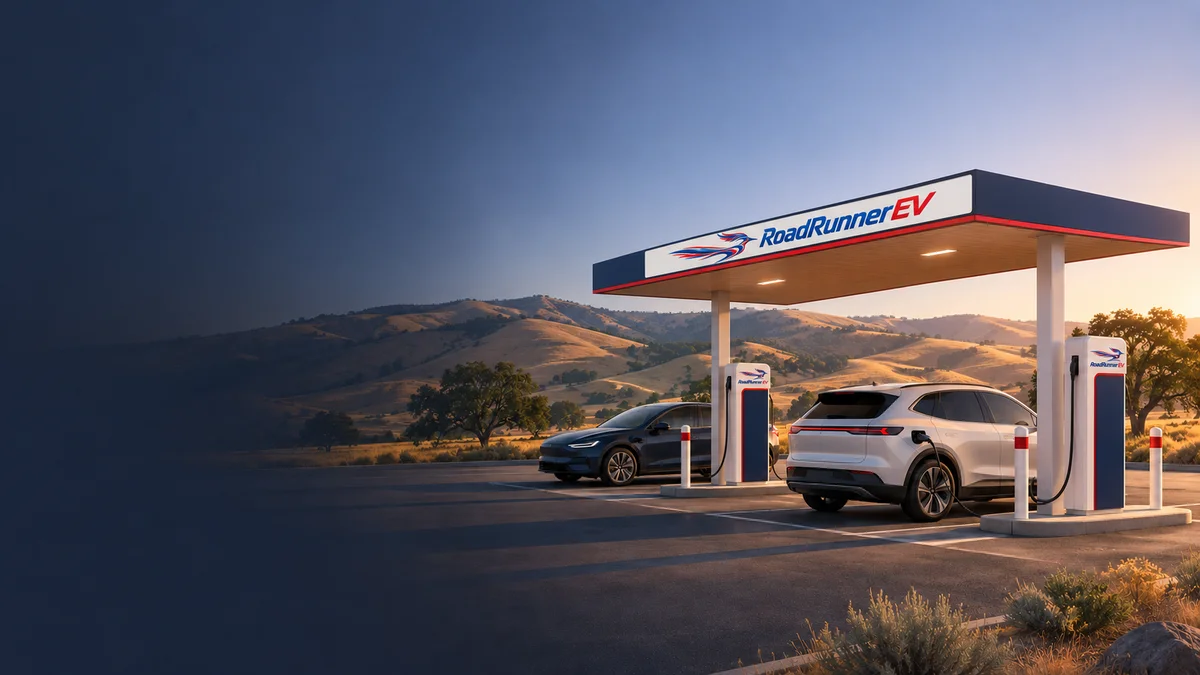
Opportunity at a glance
RoadRunner EV is seeking capital and partners to develop charging locations. Each opportunity is evaluated on its own merits.
12 planned ports at 969 Clark Avenue. In development; not open for charging.
Explore the projectSite control secured. Utility review and design completed.
View project progressWe are putting together opportunities in Roseville, Lincoln, Folsom, Chico and Oroville, with more to come.
See current opportunitiesStatus reviewed November 12, 2026. These are development opportunities, not operating stations.
Discuss project funding, financial assumptions and potential participation with our team.
Request an investor discussionExplore equipment leasing with profit sharing or a fixed monthly land lease.
Submit your property for reviewCurrent development opportunities
Yuba City is our first project. We are also putting together opportunities in Roseville, Lincoln, Folsom, Chico and Oroville. We continue to explore additional locations and partnerships across our starting region.
FIRST FEATURED PROJECT · CALIFORNIA
969 Clark Avenue · 12 planned charging ports
Opportunity development
Opportunity development
Opportunity development
Opportunity development
Opportunity development
Exploring additional locations and partnerships.
Status reviewed November 12, 2026. These are development opportunities. Additional city addresses, project scopes and opening dates have not been announced.
Why RoadRunner EV
Evaluate traffic, nearby charging, access, amenities and utility capacity to match the equipment to the place.
Build from the ground up or work with existing gas stations and landowners through flexible partnership options.
Pursue opportunities across five connected western states, with each location evaluated on its own merits.
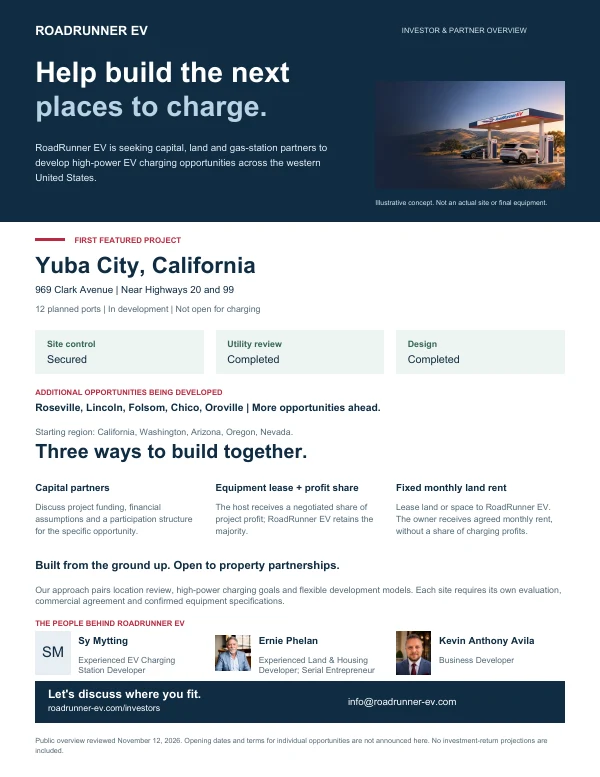
A useful starting point
A one-page introduction to our development approach, current opportunities, Yuba City progress and ways to partner.
Request the overview with your name and email. After your request is accepted, a PDF download link appears here.
For project-specific financial assumptions and potential participation, speak with the team. The public overview does not include investment-return projections.
The investment conversation
The opportunity starts with drivers who need dependable places to charge. We aim to pair carefully selected locations with a practical development plan and a commercial structure that can create value for the project and its partners.
About 2,404,900 light-duty battery-electric vehicles across California, Washington, Arizona, Oregon and Nevada.
DOE Alternative Fuels Data Center · 2025 registrations (opens in a new tab)Compared with H2 2025. EIA’s estimate includes light-duty battery-electric and plug-in hybrid vehicles across all charging locations.
U.S. EIA · September 30, 2026 (opens in a new tab)Up from 270 miles for model year 2023. Rated vehicle range is different from real-world range or charger performance.
U.S. DOE · Model year 2024 (opens in a new tab)Market evidence reviewed November 12, 2026. These figures describe the market, not RoadRunner EV operating results or utilization at a proposed location.
Why these five states
The initial region includes a substantial existing battery-electric fleet, with California making up the largest share. This is one reason we are exploring opportunities across these connected western markets.
Registration data gives us regional context. A site still needs its own evaluation of traffic, competition, access to home charging, nearby activity and utility infrastructure.
Our development approach ↗Registered light-duty all-electric vehicles
| State | Approximate vehicles |
|---|---|
| California | 1,843,100 |
| Washington | 236,400 |
| Arizona | 141,800 |
| Oregon | 98,000 |
| Nevada | 85,600 |
| Five-state total | 2,404,900 |
Adoption & the outlook
EV adoption is a long-term transition with regional differences and changing policy. Our approach should work with the evidence as it changes.
Electric cars as a share of all new car sales · BEV + PHEV
The IEA reports approximately 25% of worldwide new car sales were electric, with sales about 20% above 2024. This global measure includes battery-electric and plug-in hybrid cars.
IEA Global EV Outlook 2026 · 2025 results (opens in a new tab)The IEA’s July 2026 update projected a 29% worldwide electric-car share for the year, based on first-half trends. It is not a U.S. forecast or a guarantee.
IEA July 2026 outlook · Global projection (opens in a new tab)EIA reports that battery-electric vehicles accounted for 6% of new U.S. light-duty sales in Q3 2026, down from 10% in Q3 2025. New-vehicle sales and the accumulated on-road fleet are different measures. Electricity demand can grow while new sales slow; policy, vehicle prices and consumer preferences remain material considerations.
U.S. EIA · October 19, 2026 (opens in a new tab)Help close the charging gaps
America’s charging network is growing, but access remains uneven. The 2026 HERE–SBD EV Index reports progress alongside regional differences in infrastructure and adoption, with charging availability still among the leading barriers to EV consideration.
HERE–SBD EV Index · September 9, 2026 (opens in a new tab)RoadRunner EV is being built to help close those gaps. Our aim is to combine high-power DC fast charging with locations that fit the way people travel—along useful routes, near everyday destinations and at suitable existing gas stations.
Our site-selection approach considers traffic, nearby charging options, utility capacity, safe and convenient access, and surrounding amenities. We invite capital partners, landowners and gas-station owners to help turn that approach into new charging destinations across our five-state starting region.
U.S. DOE · EV readiness & site selection (opens in a new tab)NREL’s 2023 analysis estimated this public charging need under an assumed U.S. fleet of 33 million light-duty plug-in EVs in 2030. The ports include both Level 2 and DC fast charging.
This is a conditional planning benchmark from 2023, not a current prediction or evidence of a shortfall at any specific RoadRunner site.
NREL · 2023 infrastructure scenario (opens in a new tab)Range, charging & efficiency
Median range of available vehicle models · miles
Better range can make more journeys practical. It also changes when and where drivers choose to charge. Site planning still depends on the vehicles, routes and charging alternatives around a location.
U.S. DOE · Model year 2024 (opens in a new tab)The median EPA-rated all-electric model range reached 283 miles in model year 2024. Greater range can make more journeys practical, while also changing when and where drivers choose to charge.
U.S. DOE · Model year 2024 (opens in a new tab)The IEA identified about 160 battery-electric car models worldwide capable of charging above 150 kW in 2025. Actual speed depends on the vehicle, charger, battery conditions and available power.
IEA Global EV Outlook 2026 · Charging (opens in a new tab)The IEA estimates a typical battery-electric car uses about 70% less energy per kilometre than a similarly sized gasoline car. This concerns vehicle energy use—not charging-station efficiency or investment return.
IEA Global EV Outlook 2026 · Charging (opens in a new tab)These are industry trends. RoadRunner EV has not announced final charging power, connector specifications or charging times for Yuba City.
The RoadRunner EV strategy
Develop purpose-built charging locations from the ground up, with the site and equipment planned together.
Explore equipment leasing with profit sharing. The host receives an agreed share of project profits; RoadRunner EV retains the majority.
Rent suitable land or space for RoadRunner equipment. The owner receives fixed monthly rent and does not share charging profits under this option.
From market context to a project
Broad adoption data supports a conversation. Our project evaluation needs to establish a credible path from a suitable property to an operating station.
Who would charge here, how often, and what alternatives do they have?
Utility capacity, connection work, equipment and construction requirements.
Electricity tariffs, demand charges, maintenance, payment costs and the site agreement.
Permitting, financing, equipment reliability, competition and changing market conditions.
How a station’s economics work
A transparent investment conversation starts with the assumptions behind a project. Explore the main drivers, then discuss the specific model with the team.
Energy sold depends on how many drivers choose a location, how much energy they need and when the equipment is available. Road traffic and regional EV growth provide context; they are not a substitute for site-level utilization evidence.
This illustrates relationships, not a RoadRunner EV forecast or promised return. Project-specific financial scenarios and proposed investment terms are discussed privately.
The people behind RoadRunner EV
Bring your property, your investment questions or your ideas. Start a conversation with the people building the business.
Experienced EV Charging Station Developer
Sy brings experience developing EV charging stations.
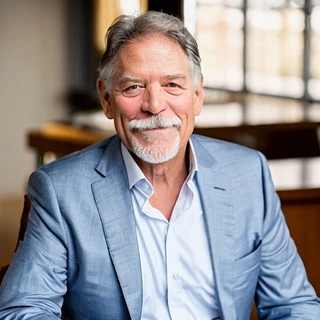
Experienced Land & Housing Developer; Serial Entrepreneur
Ernie brings experience in land and housing development and is a serial entrepreneur.

Business Developer
Kevin focuses on business development for RoadRunner EV.
Good to know
A little clarity before the first conversation.
The proposed 12-port project at 969 Clark Avenue is in development. Site control is secured, utility review is complete and design is complete. The station is not open for charging; an opening date has not been announced.
Yes. Start an investor conversation to discuss the project, capital needs, financial assumptions and potential participation. Investment amounts, rights, distributions and other terms are established for a specific agreement.
No. Roseville, Lincoln, Folsom, Chico and Oroville are opportunities being put together. Addresses, port counts and opening dates have not been announced for those cities.
Our aim is high-power DC fast charging matched to each site. Final equipment, connector specifications and charging power have not been announced. Actual charging speed will depend on the vehicle and available site power.
Our planning considers utilization, utility capacity and costs, access, competition, permitting, equipment service and the commercial agreement. These factors need project-specific review; market growth alone does not establish an individual station’s economics.
Yes. We welcome property conversations alongside capital discussions. Hosting options include equipment leasing with a negotiated host share of profits, or a fixed monthly land lease with no share of charging profits.
Let’s explore the possibilities
Discuss Yuba City, our future development opportunities, and potential investment participation with the RoadRunner EV team.
Research reviewed November 12, 2026. Sources are linked alongside their figures. Forecasts and modeled scenarios are identified as such. Market data does not establish site-level demand, future revenue or profitability.
IEA figures are summarized from the linked 2026 reports, IEA, Paris, under CC BY 4.0. Source organizations do not endorse RoadRunner EV.